Finished: 13.04.2026
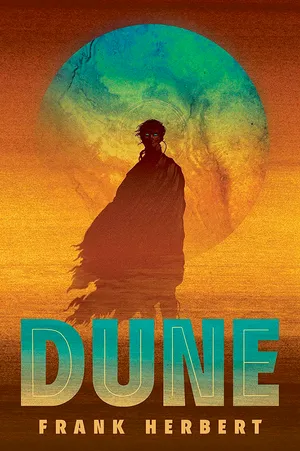
Where to even start with a book like “Dune”? I read this book for the first time at some point in my late teens or early 20s. I rarely remember details from books I read long time ago. Even if I know that I loved a book, it doesn’t mean that I remember much of details. Sometimes I don’t even remember overall shape of the plot, only vague vibes and some detached scenes or ideas. But for some reason “Dune” is one of exceptions.
Mentats—human computers, Bene Gesserit and their religious engineering, technofeudal space empire, knife fights in futuristic setting enabled by force shields, Butlerian jihad, all mind games. And above all else, whole desert ecosystem, culture revolving around it and sandworms. All those were so memorable that it has been imprinted in my mind for many years very clearly.
Even bigger testament to memorability of this novel was that I remembered clearly not only its great ideas and plot, but also whole range of characters. Paul, his father Duke Leto and Bene Gesserit “witch” mother Jessica. Their servants, warrior-troubadour Gurney Halleck, mentat Thufir Hawat and Suk doctor Wellington Yueh. Fremens, especially leader Stilgar and young woman Chani that becomes Paul’s concubine. Even cartoony villainous Harkonnens, enemies of Paul’s family, Atrydes.
It is hard for me to talk about “Dune” without mentioning its most recent adaptation by Denis Villeneuve, because in this context I returned to the novel. This director has his particular style, high budget minimalism, as I would call it. He even is on record saying that he prefers as little dialogues as possible. Reviewing his movies requires its own place, but I can say here that although I enjoyed his movies, during re-reading I couldn’t stop feeling that story like “Dune” couldn’t be properly adapted into medium like movie. Literature is uniquely well suited for showing human interiority. “Dune” uses that strength to great effect. A lot of the story happens in the minds of highly trained humans with Bene Gesserit and mentat trainings. Their conflict often happens in subtle ways, in minds, noticing small muscle movement, facial changes, voice tone unnoticeable for normal humans. Famous “plans inside of plans inside of plans”. Elaborate mind games. It is impossible to show in normal tools of cinematography and Villeneuve’s high budget minimalism only amplifies the problem.
The novel is unraveling its story with unhurried pace, allowing us to digest its beautiful worldbuilding. We see how Atrydes move out from their home planet, paradise water world Kaladan to titular Dune, planet Arrakis. However slow first part is, it is engaging, because tension constantly grows. Atrydes and their court are aware of lurking danger of a trap due to their forced relocation, but can’t control all possibilities. When the trap eventually catch them, the pace quicken and Paul with his witch mother get stranded on the desert. Then story again slows down and allows us to see the desert, its ecosystem, sandworms, Fremens and their culture in full detail. When all the strands are connected, it quickens again, we get cinematic final and confrontation with people who set the trap on Atrydes.
I’m one of those people who is not dead set against so-called info dumps in speculative fiction. In fact, I often enjoy them, but it depends on quality of specific case. I feel that “Dune” is set up in a way that encourages a lot of “dumps”. Paul’s teachers or his parents explain him various things. Atrydes are relocating to new world, very different from their home planet. Peregrinations of Paul and Jessica to unknown desert and Fremens’ community. We learn constantly and a lot alongside characters. There’s a lot of didactism in the exposition, but it is so entertaining. I will fight anyone who would mention “show, not tell”. There’s so much going on inside of minds that “showing” is exactly the problem that I mentioned about adaptations.
I already mentioned desert ecosystem and Fremens, but I want to stress how amazing they are, even in comparison to all the other worldbuilding elements that give them wider background. This novel was published in 1965. Way back before ecological thinking and environmental concerns reached wider social consciousness, although there have been some early signs, like “The Silent Spring”, but science fiction literature of the time reflected rather Cold War anxieties than designing so impressive ecosystems. On similar note, the reader could feel that the author had real admiration and knowledge about Middle Eastern and North African cultures. I am not able to discern if there were some problematic elements and there could be discussion about orientalist gaze, white saviorism etc. But as much as I could tell as layperson, Frank Herbert tried to be respectful with his inspirations.
It has to be said though, when we speak about respect towards other cultures, that the book has distinctly atheistic or perhaps agnostic outlook. The big thrust for the storyline is provided in the background by Missionaria Protectiva, program of Bene Gesserit, female sisterhood of “witches”. Bene Gesserit has very pragmatic approach to religion and they set up various legends, myths, prophecies or whole religions in some locations. So-called “backward” cultures, usually on the outskirts of space Empire. Here, and in the fact that real world inspirations for Fremen culture comes from Arab and Berber cultures, comes danger, if not sin, of orientalism and western colonial gaze. I don’t feel knowledgeable enough to weight in my own judgment, but I felt huge admiration on Frank Herbert’s side towards those cultures.
Big strength of the novel lies in its universality. It really doesn’t feel like a book from 1965. It feels ahead of its times in terms of focus on environment, for example. But also, whole setup with Butlerian jihad, in-universe conflict from millenia ago that destroyed “thinking machines” like computers and robots. In a way it feels even more prescient than giving environment so much place. Taboo and ban on computers allows story to convincingly use technofeudal setting and inhumanly trained humans to replace computers. Knife fights also doesn’t feel out of place, but they require additional assumptions of force shields to makes sense.
This book is so full of ideas that I still didn’t talk about things central to the story like eugenics program on absurdly long historical scales or melange, psychotropic that enhances various human abilities and Alia, child awakened in prenatal state by memories of ancestors. However much is crammed into the novel, it doesn’t feel like random bag of ideas, but coherent, rich world that we could inhabit. Sure, we would probably be some poor peasant, living on Dune also feels horribly harsh, but hey! Who wouldn’t want to get a ride on a gigantic sandworm!
Truly required reading for all science fiction fans. It could be also great choice for those who could feel overwhelmed by science fiction on harder side of the scale. Back then when I read this book for the first time, I didn’t continue reading next books from the cycle. But I had resolution at the start now that I will read whole cycle this time. After finishing “Dune” I couldn’t wait for spending more time in its world.