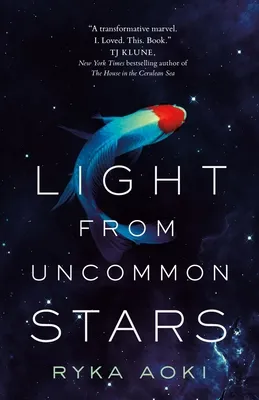
Sometimes comparisons can fall into easy trap. I noticed that often certain comparisons, in reviews or advertisements and blurbs, rub me in the wrong way. It happens when given work is compared to something currently popular. You know what I mean. At some point every epic fantasy (or even politically focused space opera) was compared to “Game of Thrones” and every fantasy for children to “Harry Potter”. For that reason I usually avoid easy comparisons. But during reading “Light from Uncommon Stars” I couldn’t stop myself from constantly thinking, what does that remind me of?
The answer I found is underappreciated trilogy of interconnected animated series — “Trollhunters”, “3Below” and “Wizards” — known collectively as “Tales of Arcadia”. There’s nothing overtly similar between the novel and the animated series and I doubt that anyone other than me, who is familiar with both, would make the same comparison.
The animated series introduced separate speculative elements, naturally belonging to different realms and even different genres. First underground fantasy world of trolls, then space opera with aliens disguising as humans and finally wizards. Put them into context of small town of Arcadia and let them slowly, gradually meet and interact until they blend naturally in viewers mind.
In this way “Light from Uncommon Stars” is very similar, it just uses slightly different ingredients. But not even that different. The main speculative ingredients in this case is fantasy of deals with the Devil and space opera alien family running away from galactic empire. Those tropes on its own are quite generic, but magic happens where they have their specific takes. Legendary and mysterious violin teacher made hellish pact that she will deliver souls of her brilliant, ambitious students at their peak fame, but now she runs out of time to deliver last soul. Alien family disguises as family of donut shop owners and use whole machinery of their high tech to ideally replicate donuts that previous owners did.
There are other, not speculative elements thrown into mix that give the novel its identity. The story is set in San Gabriel Valley, revolving mostly around American Asian community. There’s also little world of violin players and tournaments, often connected with this American Asian community. The last piece is the proper main character, other than violin teacher and alien family. She is transgender girl, rejected by her family due to her gender identity. She is alone and she moved in desperation to San Gabriel Valley, looking for shelter with befriended people from queer community. She quickly feels rejected and abused by those people as well.
She is self taught violin player. Although she doesn’t fit into profile of typical student of aforementioned legendary violin teacher at all. Her previous students were from afluent backgrounds and already started professional training. She learned to play through music from anime and Japanese video games. By struck of chance, she caught the eye and ear of violin teacher. Because main character just escaped abusive shelter of her supposed queer friend, she is taken into rich house of the teacher, to be taught playing professionally. Of course, violin teacher has hidden agenda, price of vulnerable girl’s soul. Remaining connection that glues various themes is romance between violin teacher and mother of alien family.
That mixture of separate elements — hellish pact, alien escapees from space empire, world of classical violin music, Asian American community of San Gabriel Valley, anime and Japanese video games, abusive experiences coming out of transgender identity — feels very idiosyncratic. It seems like if the author tried to cram all her passions and ideas onto this novel. Big part of the fun is to see how those things from different realms interact, but I didn’t always feel those connections are seamless. I wondered if different alien worlds also have their own hell and demons. At least that one question was partially answered, but there were other questions like that which stopped me from full immersion and perceiving this world as one, rather than connection of multiple.
There’s also aspect of the main character — transgender girl who due to her difficult life could pour much more into her music than previous student virtuoso. I could believe that discriminated groups could bring new perspectives into art, but the way it was presented here I felt like if it gave her some unnatural superpower in art. I don’t know what to think about it, because even such minority experiences doesn’t explain her phenomenon.
Those idiosyncrasies and main character abilities made me feel that I read something almost autobiographical in speculative fiction decorations, with big dose of wish fulfillmed. It doesn’t have to be the negative thing though, because the novel resonated with honesty.
Nice aspect of the novel was that it revolved around well rounded women characters. Transgirl, violin teacher, mother and captain of alien crew, her holographic daughter, violin maker and more. Themes of female choice, transgender identity and lesbian romance were on full display.
In short, this book is full of diverse elements and progressive themes. It could fulfill diverse tastes for speculative fiction fans, if they would be open to embrace its honest idiosyncrasies.