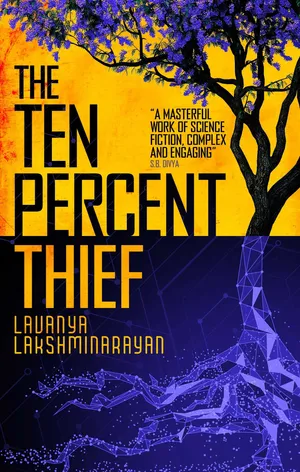
The novel is set in future Bangalore, now called Apex City. The city is divided between Analogs, discriminated and exploited bottom ten percent and Virtuals, supposedly meritocratic society that can use more advanced technology. Analogs don’t have access to computers and internet, but also limited access to electricity and fresh water. They are completely culturally separated. Virtuals themselves are divided between top twenty percent with special privileges and most advanced tech access while rest seventy percents serves as middle class pool. Eternally aspiring for becoming top twenty and threatened to be expelled away from Virtual society and struggle as Analogs. They live in separate parts of the city, divided by electrocuting wall called Carnatic Meridian.
The most surprising aspect of the novel was its structure. Every chapter, often quite short, is told from perspective of completely new character, new point of view. I thought that soon we will circle back to first characters, ending up with handful viewpoints only. But a half of the novel passed and every next chapter focused on someone new. In a way it could be thought of as collection of separated short stories, just set in the same setting. With the exception that some common threads eventually emerge and are clearly visible at the end, especially Analog rebellion plotline. Probably one of the clearest example of so-called “mosaic” novel.
It was confusing at first and I wished for some character that could be an anchor and I could know them better. Due to that cacophony of voices it was also hard to feel familiar with the world, because we learned new terms, new aspects of it, almost at every turn, without digging deep into one corner. Something that seemed like disadvantage at first, became unique selling point when things started to click into place and some previous characters started to crop up again (although seen from different perspectives).
This novel at first glance seemed like typical sociological science fiction or, to use contemporary reference, like Black Mirror episode. Some aspects of our real contemporary life are heavily exaggerated to cast light at it. Here it’s a social stratification of Indian society and its differing cultural behaviors and worldviews. Setup is painted with brush strokes, differences between groups at first seem very rigid, it feels more like satire than real society. But thanks to mosaic structure and multiple voices it eventually gains texture and feels believable at the end.
In terms of vibes, Virtual society feels like blend of the worst and most cringe aspects of corporate office work culture and contemporary social media madness. Analog society is less depicted, but seems like big Indian city slum, dehumanized by Virtual society. Towards the end we can see a little bit more of them, with some tribal or perhaps caste-like subgroups based on profession.
There were few more memorable stories for me, mostly the ones on longer side. Analog child adopted by Virtual top twenty percenters who try to keep up with her peers and be good musician. Famous influencer who refuses to have test-tube baby and wants have full pregnancy. Tour guide who gives dehumanizing tours of Virtual children into Analog part of the city.
The mentioned examples are all from Virtual perspective, but the one big thread that could be seen as the main one was from Analog perspective, spread across multiple shorter stories. Slow build up into rebellion that Virtuals overlooked, because they dehumanized Analogs so much that they themselves couldn’t imagine them capable of that. Rebellion itself is more interesting and funnier than what I initially expected from this thread.